Category: Pre-Prep News
It is with great sadness that we must inform you of the death of Nicholas Garrett who passed away earlier this week. Nick was the very much loved Master of the Abbey from 1997 to 2015. He was appointed from St Andrew’s School, Eastbourne, and after leaving Woodbridge became Headmaster of a school in Abu Dhabi. He was diagnosed with cancer last year. An event to mark his life will be held in Woodbridge School at a later stage. I am sure you will join us in prayers for Nick’s widow Ruth, his daughters Anna and Lara (who are both teachers), and his wider family. Since his return from the UAE, Nick and Ruth have been living in Eastbourne, and we will forward to Ruth any correspondence received.
May he rest in peace.
Exams. One simple word can stir up a huge range of emotions. For some it is an opportunity to show off acquired knowledge and is a validation of hard work and effort. For others it is a memory test that strikes fear and insecurity and is a disappointing finale on a period of hard work and effort. For many it is just another activity to do during the day.
There are many advantages to being part of a 4-18 school and the lack of exam pressure is an important one. In so many schools across the land Year 6 can turn into ‘flat SATS practice’ or ‘past paper pain’ an overload of repetitive paper exercises designed to ensure a particular hoop or exam is successfully negotiated. To be fair, it works. A dull diet of test and retest ensures that pupils are able to rollout formulated answers and number crunch to get the desired grade. However, and you probably guessed there was one coming, when the children move on to their senior school and are expected to utilise this knowledge they don’t know how to apply what they have learnt because that was not why they memorised it in the first place.
The traditional route into independent senior school, through the exams known as Common Entrance (common due to the fact all pupils sat the same papers into all senior schools) has been called into question as Patrick Derham OBE, Headmaster of Westminster School states, “The reality is the exam has become for us an exit test rather than a genuine entrance examination.”
In truth these exams have been under threat for a while. Many schools have turned to group activities, interviews and problem solving puzzles to test how pupils are able to apply their knowledge, work with others and demonstrated resilience and independence of thought. Senior schools want to see that pupils can connect their thoughts, join up theories and understand and enjoy their learning.
As Mr Derham also notes, “This exam heaps pressure on pupils, parents and teachers, fuelling unnecessary anxiety and stress.”
Fortunately we are not constrained by this curriculum and the need to tick boxes to ‘exit’. Our Year 6 curriculum is vibrant, varied and full of opportunity and development the right way, in my opinion, to celebrate all that has been learnt during the magical time that is prep school. There are still exams (or tests!). However these occur at appropriate points throughout the year from Year 2 onwards and the children see them as an opportunity to find out what they can do and a chance for further learning. They are not an event to be scared of and when GCSEs and A-levels come round our children are not scared.
I am delighted that this change will allow more schools around the country to benefit from the curriculum we already enjoy. Removing Common Entrance will allow schools to “use this freedom to develop their curriculums in ways that are even more rigorous and inspiring… and enable young minds to flourish,” Patrick Derham.
Nicola Mitchell
Quotes taken from “Common Entrance exam is a burden children do not need” by Patrick Derham OBE, Headmaster of Westminster School writing in the SATIPS publication, Prep School, Spring 2019 Issue 94.
Prep school education is incredibly well regarded around the world and the benefits of a broad and wide ranging curriculum are clear, if tricky to quantify. In recent years there have been a number of excellent initiatives run by different organisations to try and make up for the shortfall that primary aged children are missing out on due to the constraints of the National Curriculum, class sizes and budget constraints in some primary schools and the demands placed on family life. The National Trust’s ‘50 things to do before you are 11 and three-quarters’ is an excellent list of fun, outdoor activities that all the family can become involved with. The Girlguiding Association and The Scout Association have been advocates of outdoor learning, problem solving and adventure challenge for years. I am delighted to note that the Education Department has now launched ‘My Activity Passport’ a list based on a vision for every child to have the opportunity to enjoy new and varied experiences. This comprises of key areas; “drive and tenacity; sticking at the task at hand; understanding how to work towards long term goals when reward might be a long way off in the future; and being able to pick yourself up and bounce back from life’s challenges.” www.gov.uk
This initiative is long overdue and a wonderful step in the right direction for all children. Behind the excitement of finally understanding the value of lessons learnt not sat at desks, is the realisation that for some children this way of thinking and being does not come naturally. We are so fortunate to have the wonderful grounds, the resources and the staff to facilitate these core skills being embedded into our curriculum alongside our unique Learning@Woodbridge ethos both within subjects and as stand-alone discrete lessons. Forest Schools, Mindfulness, Engineering, Food Technology, Drama, Music and PE are fundamental pillars of the experience at The Abbey. Together with House Captains, Leaders, Librarians, Eco-Committee, School Council and a myriad of other opportunities the skills of confidence, resilience, and involvement are woven throughout the curriculum.
This initiative should, in time, slowly start to enhance learning for all children and not just those who are fortunate enough to already benefit from this positive step forward.
The Reception children took part in their first Nativity Play this week “Lights, Camel, Action!”
They performed their dances beautifully and joined in enthusiastically with all the songs.
On Friday 30 November Year 2 took part in their first swimming gala against Ipswich School and Orwell Park. The children were all eager to show parents and staff the progress they had made this term and swam with confidence. The children were proud to represent their school showing determination in individual races and great team spirit in the relay races. There was a super atmosphere throughout the afternoon and we look forward to watching the children’s continued progress throughout the year.
Anna King
The Reception children have been learning about nocturnal animals this week. After reading the story Owl Babies, they produced this beautiful art work.
Ask anyone about education and they have an opinion on what should be taught and why. Quite rightly; we all went to school and we were all affected by the experience. Where we differ though is deciding what was the best / worst / most enjoyable / most important experience. History versus Geography seems to be a hot topic in my house!
However, at prep school level it is not the individual academic subjects that are so important; that comes later as exams start to play an ever increasing part in the educational experience. At this stage each subject works alongside the skills of socialisation, emotional intelligence, problem solving and resilience. No one area is more important than another as, if we ignore learning about appropriate behaviour, manners and compassion, we cannot ask the children to ‘top up’ and take an extra module at 16.
We have worked hard at Woodbridge to integrate the L@W (Learning at Woodbridge) into the curriculum so that it is overt and obvious and the children are aware that that they are learning key skills. The skills themselves are the essence of what makes a good prep school. However there is so much more on offer that also supports this key developmental area.
Engineering at The Abbey was integrated into the curriculum for Years 5 and 6 from September 2017 and the bespoke syllabus was written specifically by a member of staff with a background in engineering. Dividing the classes allows us to teach pupils in class sizes of up to 10 and ensures that the pupils all have the opportunities to develop their practical skills. Within the curriculum we cover a variety of engineering principles and branches including:
Mechanical engineering – manufacturing, automotive and aerospace; Chemical engineering – materials and process; Electrical engineering – robotics and computing; Civil engineering – environmental and water resources.
Each project is given a brief, not a list of instructions, and the children have to problem solve, work together and test their creations to arrive at the optimal conclusion. The box cart project develops the pupils’ study into forces and Newton’s laws of motion from Year 5 and their study on invention through the Victorian era and the links to mathematics and science are obvious.
Pupils design chassis, axels, brackets, steering and braking systems in teams. They make their own material and tool choices and problem solve their way to a finished product. Engineering encourages children to experiment, make mistakes – evaluate those mistakes and overcome them.
It is these skills, together and with equal importance alongside all other subjects, which will prepare our children for the future.
Our children need to be able to use their considerable knowledge, apply it to situations but also be adaptable and resilient as they move forward in life. Every subject therefore has a part to play ensuring that knowledge is deep, connections are made and problems solved. Alongside this we want our children to be wholesome, kind and engaging individuals who will every opportunity in the future to make the right decision for themselves as they move into adulthood.
So… what is the most important subject to teach at school and why?
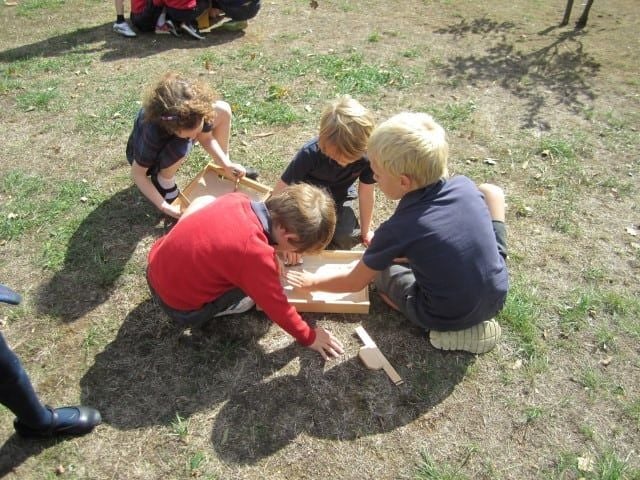
In science the Year 2 children conducted experiments to test the friction created by different surfaces. They used toy cars on grass, gravel, sand and tarmac and made predictions about which surface would provide the most and least friction. The children discussed what is meant by a fair test and recorded their results in small groups. Great teamwork!
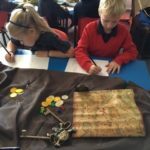
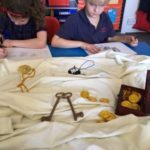
Some Pirate treasure has been discovered! Could it belong to the infamous Captain Blackbeard? It’s down to Year 2 to draw the evidence, using their skills of careful observation and accuracy. We need to do a still life of our discovery, in case that landlubber returns!
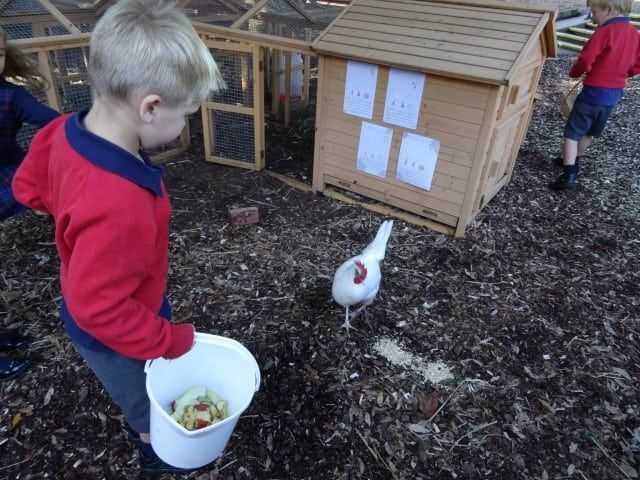
As part of their topic “All About Me” the children are learning about caring for their pets. This week they have had the responsibility of looking after the Queen’s House pet chickens. They have been feeding them, collecting the eggs and cleaning them out.